Beyond the Clipboard: How to Document Building Deficiencies in Ontario Condominiums
· By Sunni Dowds · Operations
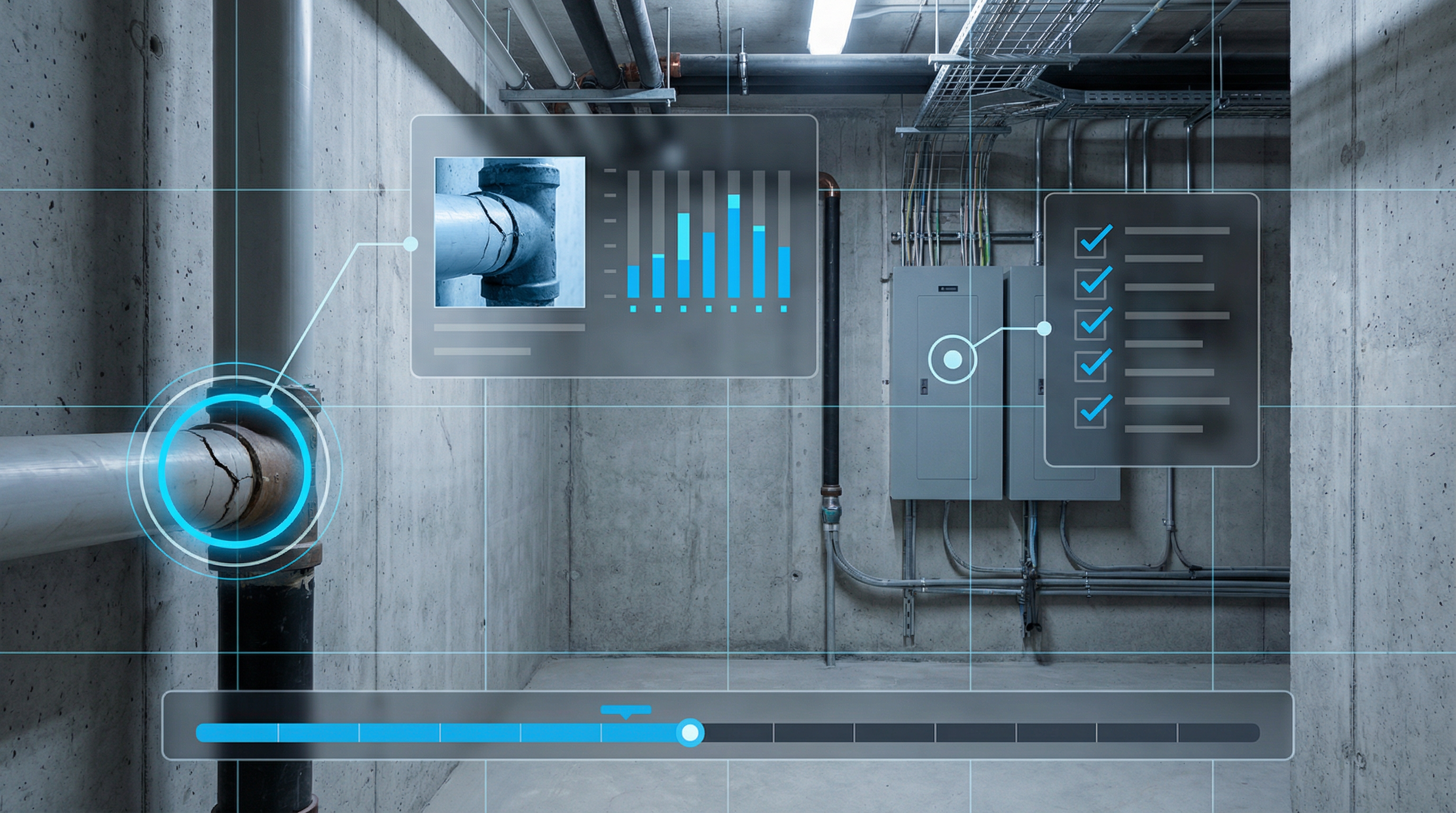
Properly documenting building deficiencies in Ontario condominiums is not just about noting that something is broken — it requires structured records that satisfy governance obligations, regulatory expectations, and the evidentiary standards of tribunals and courts.
Properly documenting building deficiencies in Ontario condominiums is not just about noting that something is broken — it requires structured records that satisfy governance obligations, regulatory expectations, and the evidentiary standards of tribunals and courts.
In Ontario condominium operations, identifying a building deficiency is only the first step. What happens after that identification — how the deficiency is documented, who is notified, what action is taken, and whether resolution is verified — determines whether the corporation has met its obligations under the Condominium Act, 1998, CMRAO professional standards, and applicable safety legislation.
This article outlines a practical framework for documenting building deficiencies that creates defensible records — not just completed tasks. The difference matters when a board asks about maintenance history, when an insurer reviews a claim, or when a CAT tribunal examines whether the corporation exercised reasonable care.
What Constitutes a Building Deficiency in Ontario Condominiums
Under the Condominium Act and Ontario Fire Code, a building deficiency includes any condition in common elements — from cracked corridor tiles to malfunctioning fire door closers — that deviates from expected performance, and fire safety deficiencies under O. Reg. 213/07 carry mandatory corrective action and documentation timelines.
Deficiencies in condominium common elements range from minor cosmetic issues to critical life safety failures. A cracked floor tile in a corridor is a deficiency. A malfunctioning fire door closer is a deficiency. Water infiltration in a parking garage ceiling is a deficiency. An emergency light that fails to illuminate during testing is a deficiency. Each requires documentation — but the level of urgency, the regulatory implications, and the documentation standards differ significantly. Managers unfamiliar with these deficiency documentation requirements should review them before their next inspection cycle.
Under the Ontario Fire Code, certain deficiencies — particularly those involving fire alarm systems, sprinkler equipment, emergency lighting, and fire doors — trigger specific corrective action and documentation requirements. Deficiencies in these systems cannot simply be noted and deferred; they require prompt attention, documented follow-up, and evidence that the system was restored to compliance.
The Five Elements of Defensible Deficiency Documentation
A defensible deficiency record requires a specific description of what was observed, the exact location within the building, a contemporaneous timestamp, linked photographic evidence, and documented resolution with verification — each element serving a distinct compliance and evidentiary function.
- What Was Observed — A clear description of the deficiency — not just "problem in stairwell" but "Level 2 stairwell B fire door not latching fully, door closer arm appears misaligned." Specificity matters when records are reviewed months or years later by someone who was not present.
- Where It Was Found — The specific location within the building — floor, area, system, and asset. Linking deficiencies to building areas creates searchable records and allows trend identification across locations over time.
- When It Was Identified — A timestamp — not an approximate date reconstructed later, but the actual date and time the deficiency was documented. Timestamped records demonstrate that the corporation's response timeline was reasonable.
- Photographic Evidence — Photos taken at the time of observation, linked to the deficiency record. Photo documentation is increasingly expected by fire marshals, insurers, and tribunals. The 2026 Ontario Fire Code updates mandate photographic evidence for fire safety deficiencies.
- Resolution and Verification — Documentation of what corrective action was taken, when it was completed, and whether a follow-up inspection confirmed the issue was resolved. Closing the loop on deficiency resolution is what separates a task management system from a defensible compliance record.
Common Documentation Mistakes That Create Compliance Risk
The four most common documentation failures — recording repairs without capturing the original observation, storing photos without linking them to deficiency records, closing items without resolution verification, and documenting deficiencies hours or days after observation — each result from informal processes rather than negligence.
- Documenting the fix but not the observation — Service request platforms often show that a work order was issued and completed. But the record may not capture what condition was actually observed, whether safety was involved, or whether the repair was verified afterward.
- Photos without context — Phone photos taken during walkthroughs have value, but only if they are linked to a specific deficiency record with location, date, and description. Unattached photos in a camera roll cannot serve as organized compliance evidence.
- No resolution verification — Identifying a deficiency and assigning a contractor does not complete the documentation cycle. Without verification that the corrective action resolved the issue, the record remains open — and an open deficiency record with no documented follow-up creates more risk than no record at all.
- Delayed documentation — Recording deficiencies hours or days after observation introduces accuracy risk and undermines timestamp integrity. The strongest records are created at the point of observation, on the device being used during the inspection.
Prioritizing Deficiencies: Safety, Compliance, and Maintenance
Fire safety deficiencies under O. Reg. 213/07 require immediate corrective action and documented resolution, regulatory compliance deficiencies demand prompt planned remediation before the next fire marshal or CMRAO review, and maintenance deficiencies can be scheduled within normal operational workflows — each category requiring different response timelines and documentation standards.
Effective deficiency management requires categorization by urgency. Life safety deficiencies — fire door failures, emergency lighting outages, sprinkler system issues, trip hazards in common areas — require immediate attention and documentation. Regulatory compliance deficiencies — items that create exposure during fire marshal inspections or CMRAO reviews — require prompt but planned resolution. Maintenance deficiencies — cosmetic issues, minor wear, and deferred items — can be scheduled within normal operational workflows.
When deficiencies are categorized and prioritized within purpose-built inspection software designed for Ontario condominiums, managers can demonstrate to boards that resources are being directed appropriately. Board reports showing deficiency counts by priority, resolution timelines, and trending data provide the governance visibility that informed directors expect. This approach transforms deficiency tracking from a reactive task list into a documented governance process with auditable accountability.
From Observation to Evidence: Building a Defensible Record
Contemporaneous records — documentation created at the point of observation within a systematic process — carry significantly more evidentiary weight with CAT tribunals, fire marshals, insurers, and courts than summaries reconstructed after an incident or inquiry.
When deficiency documentation is structured consistently, it serves every audience the corporation may need to address. Board members receive clear reports showing building conditions and management responsiveness. Fire marshals find organized records of fire safety deficiency resolution. Insurance carriers reviewing claims see documented evidence of reasonable care. Legal counsel preparing for CAT tribunal proceedings can demonstrate a pattern of systematic monitoring and follow-up.
The critical difference is between documentation created at the time of observation and documentation reconstructed after the fact. Tribunals, regulators, and courts place significantly more weight on contemporaneous records — documentation created in real time as part of a systematic process — than on summaries assembled weeks or months later in response to a specific inquiry. Managers responsible for multiple properties can speak with our team about how deficiency documentation workflows operate across a portfolio.
Condo Inspect Pro produces defensible deficiency records from the moment an inspection item fails — capturing timestamped observations, linked photos, location data, priority assignment, and tracked resolution within a single auditable platform. Every deficiency flows from observation through corrective action and verification without requiring separate systems or manual reconstruction.
This article reflects the author's professional experience in Ontario condominium management. Consult your property management team, fire safety consultant, and legal counsel for specific guidance applicable to your properties.
Frequently Asked Questions
How should building deficiencies be documented in Ontario condominiums?
Each deficiency must capture five elements: a specific description of the condition, the exact building location (floor, area, system), a contemporaneous timestamp, linked photographic evidence, and documented resolution with verification. Records created at the point of observation carry the most evidentiary weight.
What deficiencies require immediate attention in a condominium?
Life safety deficiencies — fire door failures, emergency lighting outages, sprinkler system issues, and trip hazards — require immediate corrective action. Fire code deficiencies under O. Reg. 213/07 carry mandatory documentation and remediation timelines.
Why do photos without context fail as compliance evidence?
Unlinked photos cannot establish when, where, or what was observed during an inspection. To serve as compliance evidence, photos must be attached to a specific deficiency record with location, date, description, and inspector identification.
What is the difference between a work order and a deficiency record?
A work order tracks a task through assignment and completion. A deficiency record tracks a building condition through observation, evidence capture, prioritization, corrective action, and verified resolution — producing the governance-grade documentation that boards and regulators expect.
How does Condo Inspect Pro handle deficiency tracking?
When an inspection item fails, the system creates a tracked deficiency with timestamped photos, location data, and priority assignment. The deficiency flows through a resolution workflow with verification, producing a complete audit trail within a single platform.