When the Call Comes In: Documenting Emergencies for Effective Response Management
· By Sunni Dowds · Emergency Response
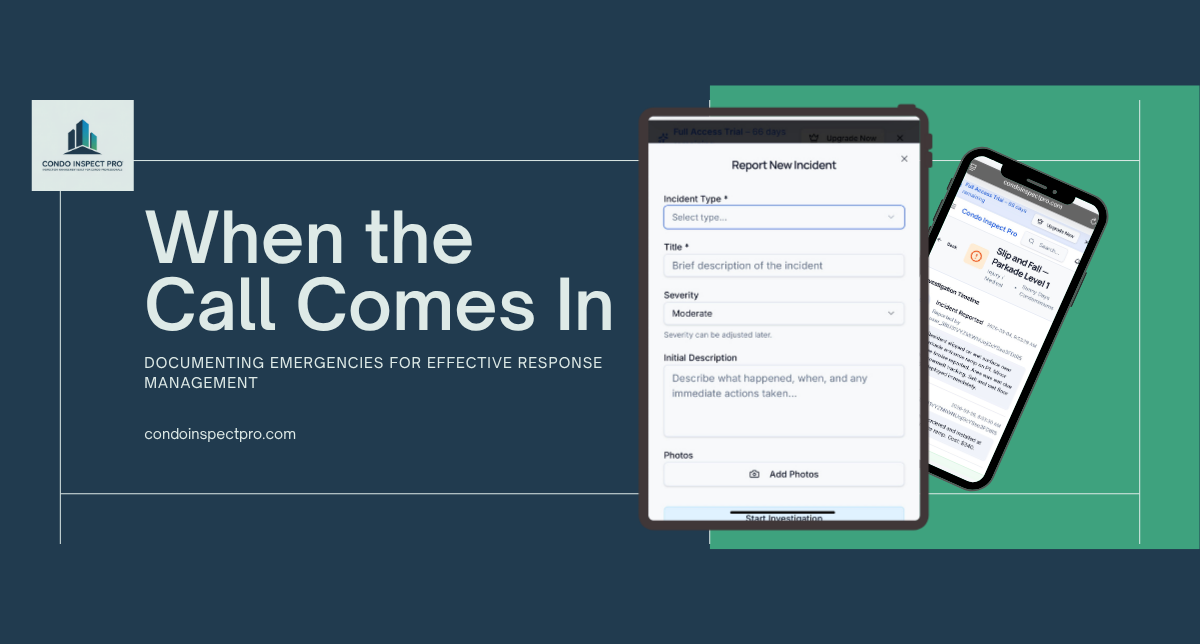
A 70mm rainstorm. 14 units affected. Coordinating documentation across multiple parties in real time. The story of how a building emergency revealed why centralized documentation is essential for property managers.
Seventy millimeters of rain in a matter of hours. Fourteen units affected. Five people documenting the emergency simultaneously, none of them in the same place. What I learned that night changed how I thought about managing buildings.
The Night the Roof Drain Failed
Remember when Toronto was hit by one of the most severe storms in recent memory? Over 70mm of rain in a matter of hours, drains overwhelmed, streets flooded. I was managing a high-rise condominium building that night and what happened inside it is something every property manager should be thinking about.
In a high-rise condominium building, rainwater from the roof is collected and directed down through vertical internal pipes called roof leaders or roof drains. They run inside the building, hidden within walls and mechanical chases, carrying water down to the storm drain system at grade. Most residents never know they exist until one fails.
When that pipe let go, the water did not ask permission. It found every path it could through floors, ceilings, and walls. Within hours, more than 14 units were affected. Elevators were down. The parking garage was taking water. Common areas were a mess.
I had been through emergencies before. But the scale of this one was different.
The Response Went Well. What Came After Didn't.
The response itself went well. I had a strong remediation crew on site quickly and stayed on them at every step. Security followed me through the building taking notes in real time. I was making voice memos during conversations with owners as we walked the damage. The superintendent was documenting his own observations. The remediation crew was capturing their own photos and progress notes. The elevator company produced their own report.
By the end of that night I had taken over 5,000 photos. The remediation crew had submitted their own series. Security had a detailed written record. The superintendent had notes from the initial walkthrough and every check since. The elevator company produced their detailed service report. The electrical contractor who we brought in to assess wet electrical systems added their own documentation.
Every one of those people was doing the right thing. The problem was that none of it was in the same place.
Just Over Three Weeks of Coordination
The restoration took just over three weeks, contractor quotes, insurance adjuster involvement, repair sequencing, and keeping the building operational while work was underway. Throughout that entire period I was also working with affected residents to help them understand what the corporation's insurance policy covered, what the standard unit description meant for their specific situation, and where their own unit owner policy picked up from there.
Fourteen units of people out of their routines, stressed, and looking to their property manager for answers, while I was simultaneously managing reports from four different parties, all in different formats, all arriving on different timelines.
The emergency response was solid. Managing everything that came after it was another job entirely.
What That Experience Made Clear
The response was only as strong as the preparation that came before it. I knew that building. I knew where the systems were, how they were connected, what had been inspected recently and what had not. That knowledge did not come from memory. It came from years of methodical documentation.
But coordinating documentation across multiple parties, manually, during an active restoration is not a system. It is survival.
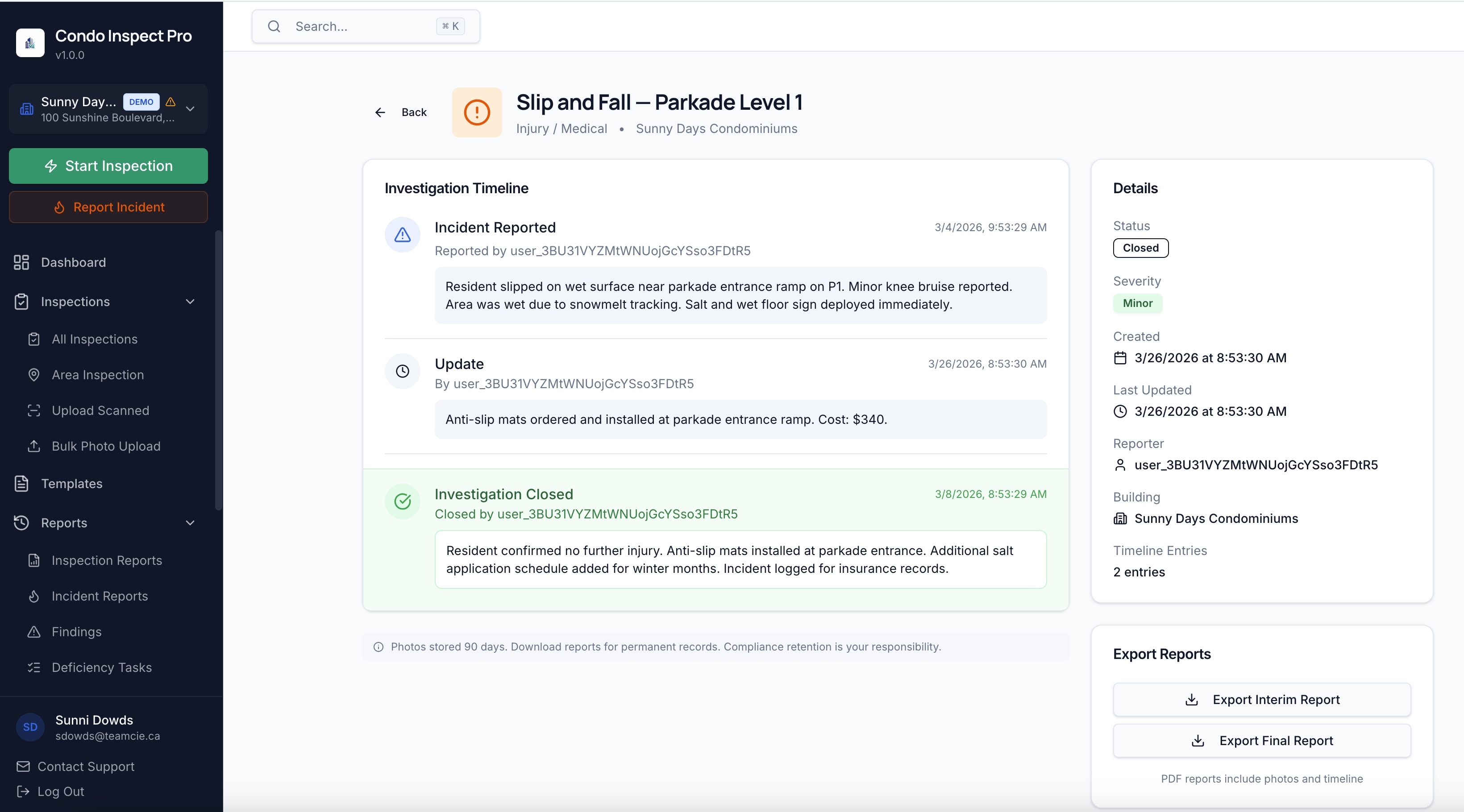
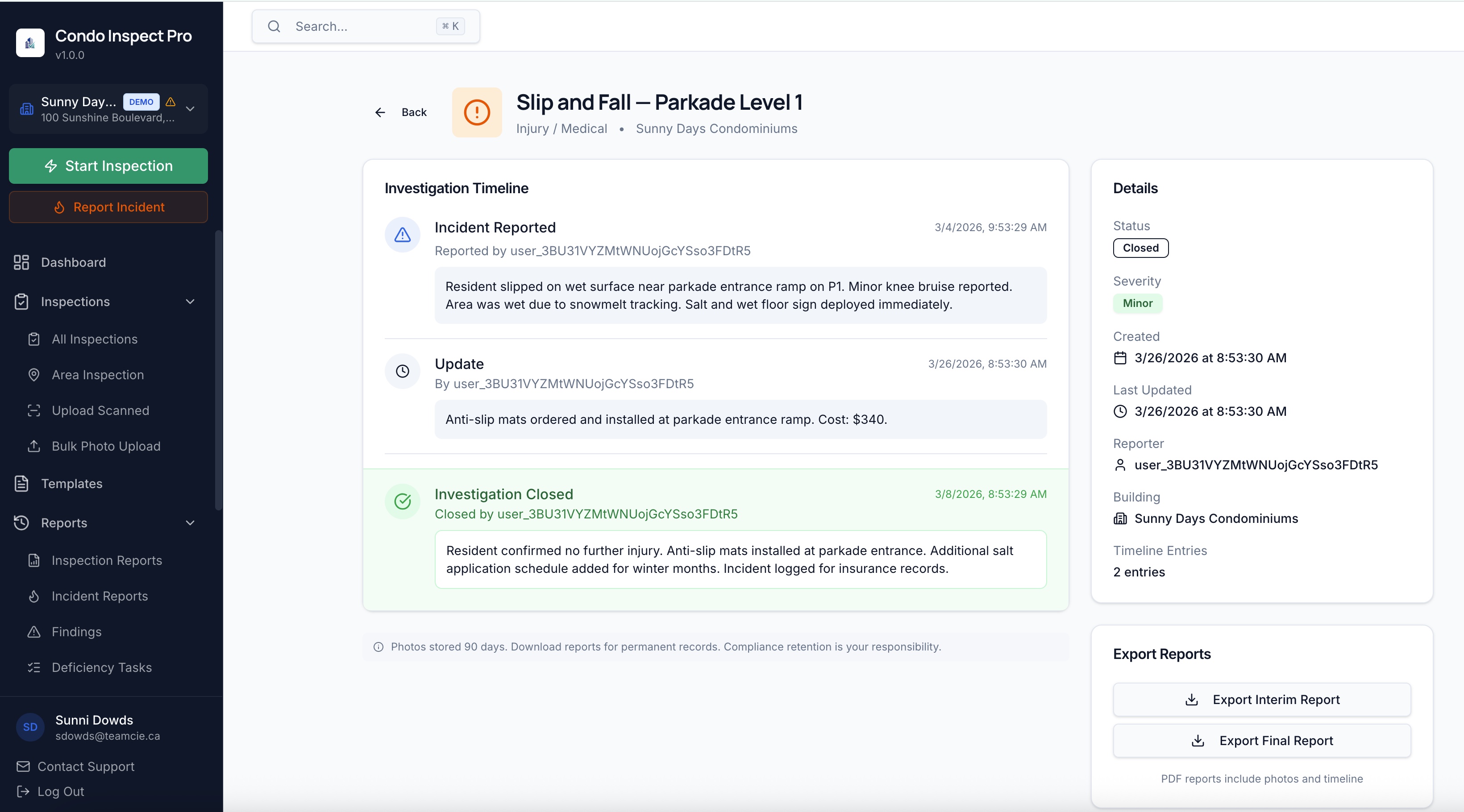
The question I kept coming back to was what it would have looked like if all of that had been in one place from the start. Every team member, site staff, contractors, the remediation crew, documenting directly into a single platform. Photos timestamped and attached to the right area. A running account of the event built in real time by everyone involved, not compiled by one person across weeks of back and forth.
Inspection history by area. Building systems documented and current. A record that everyone could reference and contribute to from day one.
Building Better Systems
That is what I built Condo Inspect Pro to do. Not to replace the judgment and experience that gets you through a night like that one, but to make sure everything that follows is organized, centralized, and ready when the adjuster, the board, and the residents all need answers at the same time.
Every emergency generates a paper trail. The question is whether yours is organized before you need it.
Sunni Dowds is a licensed condominium professional with nearly two decades of experience managing Canadian condominiums and the creator of Condo Inspect Pro, a documentation platform designed to support emergency response coordination and defensible decision-making.